
Dairy Barn Chores vs. Mom's Mobility: Keeping Rural Ties Safe
For many rural families, the barn, garden and daily chores are more than work. They are identity and connection. Here is how to keep those ties while protecting mobility and safety.
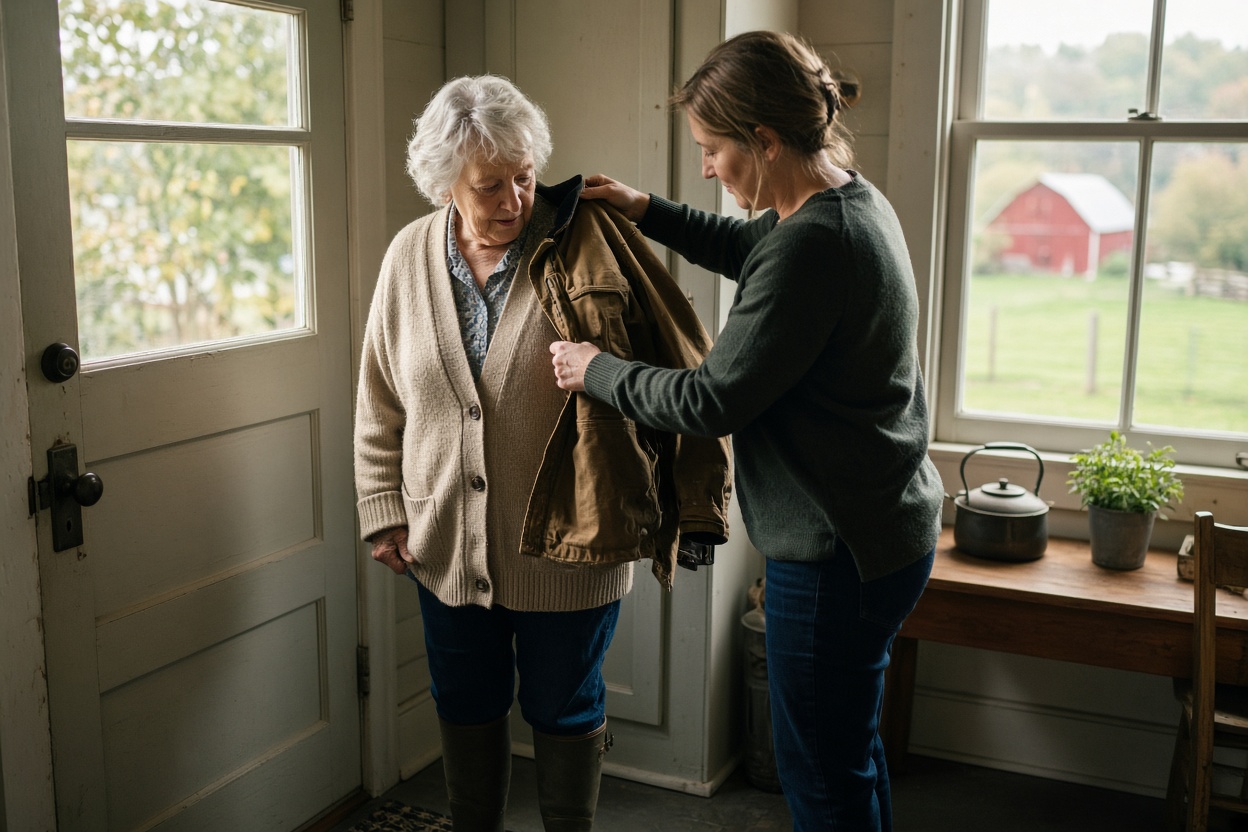
If you grew up on a farm, or married into one, you already know that chores are not just chores. Feeding the animals, checking the fence line, bringing in the garden harvest and hearing the familiar sounds of the barn in the early morning are part of who your mother or father is. So when you notice that your loved one is struggling with the steps to the milk house, the icy path to the hay loft or the heavy buckets they have carried for decades, the question is rarely simple. You want to protect them, but you also do not want to take away the very routines that give their days meaning. This article is about finding that balance, so that rural ties can continue safely.
Why Rural Routines Matter So Much
For many older adults who have lived and worked in rural communities, daily chores provide structure, purpose and social contact. A parent who still walks out to check the animals each morning is doing more than caring for livestock. They are keeping a rhythm that signals to themselves and to others that they are still capable and still needed. Neighbors may stop by, a grandchild may come to help, and the simple act of being outdoors can lift mood in ways that a quiet living room cannot.
Caregivers sometimes underestimate this. It can feel logical to suggest that a parent simply stop doing the heavy work, but that message can land as a loss of independence and identity. Many families in Upstate New York tell a similar story: the parent who once ran the entire operation now feels like a passenger. Acknowledging that loss openly, before making any changes, often makes the conversation far more productive.
It also helps to separate the parts of the routine that carry meaning from the parts that carry risk. Watching the sunrise from the porch, talking with a neighbor over the fence and tending a small kitchen garden may be deeply important, while hauling feed bags up a slippery ramp may be the piece that puts them in the emergency room. Looking at each task individually makes it possible to protect the meaning while reducing the danger.
Understanding the Real Risks in Barn and Farm Work
Farm and barn environments contain hazards that are easy to overlook when you are used to them. Uneven gravel, wet concrete, manure, loose boards, low doorways, tractors and livestock can all lead to a fall or injury. Older adults face additional challenges: slower reaction times, reduced balance, changes in vision, medications that cause dizziness, and bones that break more easily. A stumble that a younger person would shake off can become a fracture that changes the course of a year.
Weather in our region adds another layer. Snow, ice, mud season and early dark evenings all increase the chance of a fall during chores. Many families find that the most dangerous moments are the transitions: stepping from a warm kitchen into a cold mudroom, crossing an icy yard in the dark, or climbing into a truck cab. Identifying those specific moments is often more useful than trying to assess the whole farm at once.
Be alert to the warning signs that a routine has become unsafe. These can include new bruises or unexplained scrapes, a parent who avoids certain areas they used to visit daily, skipping chores they once loved, or a noticeable change in how they walk, rise from a chair or get in and out of a vehicle. Any sudden change in mobility, confusion or dizziness should be discussed with a doctor promptly, because it may point to an underlying health issue rather than simply the natural effects of aging.
A Simple Walkthrough Checklist
- Walk the path from the house to the barn or garden at the time of day the chores usually happen.
- Note any uneven surfaces, loose boards, standing water, ice or poor lighting.
- Check handrails, steps and gates for stability.
- Look at where heavy items are stored and whether they must be lifted from awkward heights.
- Consider whether a phone or two-way radio is within reach during the task.
Balancing Independence With Safety
The goal is rarely to stop all activity. Instead, think in terms of modifying how the work is done. A parent who insists on carrying water buckets might be able to use a wheeled cart or a smaller container. A person who loves feeding chickens might do that task while seated on a stool with a low-sided bucket, or hand the heavier scoop work to someone else. Small adjustments often preserve the satisfaction of contributing while lowering the physical demand.
Involve your loved one in planning these changes. People are far more willing to accept support when they help design it. Ask what part of the day they look forward to, which tasks feel most important to keep, and where they feel least steady. Then work together to find solutions. You might agree that they will still be the one to decide when the cows come in, while a younger family member handles the lifting of hay bales.
Be honest about the limits of what can be modified. Some tasks, such as operating heavy machinery, climbing ladders or working alone in icy conditions, may carry risks that no adjustment can fully eliminate. Having a frank conversation about those limits, ideally with a doctor involved, allows the family to set boundaries with compassion rather than making sudden, unilateral decisions.
Practical Home Modifications for Rural Homes
Many farmhouses were built long before accessibility was a consideration. Stairs may be steep, bathrooms may be small, and the path between the house and outbuildings may be long. Simple changes can make a significant difference. Good lighting along walkways and at entry doors, non-slip mats in the mudroom, sturdy handrails on both sides of stairs, and a clear, level path to the car can reduce risk substantially.
Consider where the person spends their time, not just the obvious areas. A bedroom on the second floor may require a daily trip down steep stairs, which can be as challenging as the barn itself. Some families arrange for a first-floor sleeping space, add a second handrail, or install a stair lift when a home has a long-term need for it. Local contractors who work with older homes can often suggest practical options that respect the character of the house.
Winter preparation deserves special attention. Keep a shovel or ice melt near the main path, clear snow promptly, and consider using a marked or lit route so that the way to the barn is visible in the dark. Store frequently used tools and feed at waist height. Simple planning like this turns a hazardous daily trip into a manageable one.
When Home Care Support Can Help
There may come a point when the family cannot provide all the supervision and physical help that a parent needs, even with thoughtful planning. Working adult children often live an hour or more away, or hold jobs that make daytime visits impossible. Caregiver burnout is real, especially when the caregiver is also managing their own farm, household and family responsibilities.
Professional home care can fill important gaps. A home health aide or personal care aide can provide help with daily activities, meal preparation, medication reminders and transportation to appointments, which can free family members to focus on the parts of caregiving only they can offer. In some cases a nurse can assess the home, review medications and help coordinate with the primary care provider. Many families find that having a consistent, trusted person around also gives their loved one more confidence to stay engaged in the routines they value.
Care can be arranged in a way that respects rural life. Aides can be scheduled around morning milking routines, garden seasons or family visits, and the care plan can explicitly include time for the things the person enjoys. The aim is to support the parent in their home and community, not to replace their role in it.
Talking With Your Parent About Changes
Conversations about safety can be among the hardest a family has. Start from respect and curiosity rather than from a list of concerns. Ask what they most want to keep doing and why, and listen carefully. Share specific observations rather than general worries, such as noticing that they seemed unsteady on the wet ramp last Tuesday, and invite their ideas on how to make that path safer.
Choose the right moment. A tense conversation in the middle of a crisis is rarely productive. A calm evening at the kitchen table, perhaps with a cup of coffee, often works better. Involve other trusted people when appropriate, such as a sibling, a longtime friend, or the family doctor, but keep your loved one at the center of the decision-making. If there is resistance, it is reasonable to pause and try again later, while continuing to take basic safety steps like better lighting.
Remember that you are not trying to win an argument. The goal is a shared plan that protects your parent while honoring who they are. Some families create a simple written agreement that lists the tasks the person will continue, the ones that will be shared, and the warning signs that will trigger a new conversation. Revisiting that plan every few months keeps it current as needs change.
Keeping the Family Connected Across Generations
Rural families often carry knowledge that is passed down through hands-on work. The way a parent reads the weather, the particular method they use to set a fence post, or the stories attached to a barn are treasures worth preserving. When safety changes limit physical participation, families can find other ways to keep that knowledge alive, such as recording stories, letting a grandchild watch and learn from a seated position, or having the parent direct the work while someone else performs it.
Younger family members may also find meaning in helping safely. Teaching a teenager to do the heavy lifting while the grandparent supervises from a chair turns a chore into a shared experience. These arrangements can strengthen bonds and remind everyone that caregiving is not only about limitations but also about continuity.
Frequently Asked Questions
Is it wrong to ask my parent to stop doing barn chores altogether?
Not necessarily, but a blanket request often causes more resistance than a conversation about specific risks. Many families find it more effective to modify how chores are done, share responsibilities, or limit only the tasks with the highest danger. Involving your parent in the decision usually leads to a better outcome than an abrupt ban.
How can I tell whether a change in mobility needs a doctor’s attention?
Any sudden change, such as new unsteadiness, a fall, new confusion, dizziness or pain that does not go away, should be discussed with a healthcare provider promptly. Gradual changes are also worth reporting so the care team can review medications, vision, strength and balance. This general information is not a substitute for a medical evaluation.
What home changes are most useful for a rural farmhouse?
Good lighting along paths and at entrances, non-slip surfaces in wet areas, sturdy handrails on both sides of stairs, and a clear, level route between the house and outbuildings tend to make the biggest difference. A first-floor sleeping area or a shorter path to the car can also reduce daily risk. A local contractor familiar with older homes can suggest practical options.
How do I know when it is time to bring in home care support?
Consider outside help when family members cannot provide consistent supervision, when the parent needs regular help with daily tasks or medications, or when caregiver stress is affecting your own health and family life. A licensed agency can assess the situation and suggest a plan. Many families start with a few hours a week and adjust as needs change.
Where can I learn more about programs that help pay for home care?
Coverage rules for programs such as Medicaid, CDPAP and Medicare change over time and depend on individual circumstances, so it is best to check official sources directly. Your local county office for aging services, the New York State Department of Health and Medicare.gov are good starting points. A licensed home care agency can also explain general options, though eligibility decisions are made by the programs themselves.
Moving Forward With Care and Respect
Protecting a loved one’s mobility does not have to mean ending the rural life they love. With honest conversations, practical changes to the home and barn, and the right support when it is needed, many families find a path that keeps chores, connections and dignity intact. The barn may look a little different, with a stool instead of a bucket or a grandchild carrying the feed, but the meaning can remain.
If you are weighing these decisions and would like to talk through options for your family, the team at At Home Care Partners is glad to offer a free consultation. We can listen to your situation, explain the types of support available, and help you think through a plan that honors your loved one’s independence and your family’s needs. Reaching out is a sign of care, not of giving up.
note that this is general information, not medical advice
More from the At Home Care Partners blog
- Dairy Farm Families: Caring for an Aging Parent Who Lives Alone
- Pill Organizers and Pharmacy Refills Across Upstate Lake Effect Snow
- Rural Upstate Farmhouses: Making Stairs and Basements Safe for Aging Parents
- Hosting Family Visits Safely: A Checklist for Upstate Homes