
Fall Garden Chores and Aging Parents: Safe Yard Work in Upstate NY
Fall garden cleanup can feel like a cherished ritual, but for aging parents it carries real risks. Here is how families can help their loved ones enjoy the yard safely.
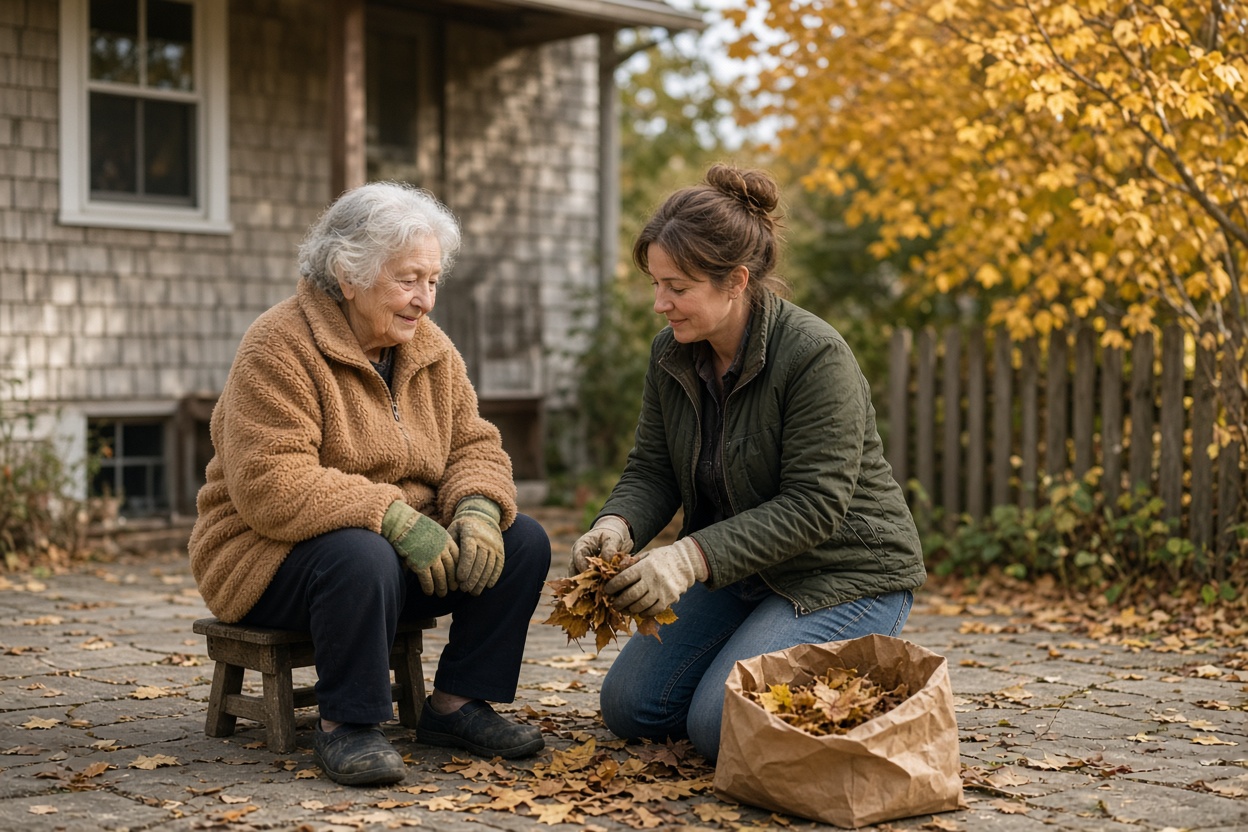
There is something deeply comforting about autumn in the garden. The air turns crisp, the maples blaze, and the last tomatoes come off the vine. For many older adults, fall cleanup is more than a chore. It is a connection to a home they have loved for decades and a way to keep their hands busy and their sense of purpose intact. Yet the same tasks that feel satisfying can quietly become hazardous as strength, balance, vision, and stamina change. Families across Upstate New York often find themselves caught between honoring a parent’s independence and worrying about a fall on wet leaves or a strained back behind the shed. This guide offers practical, respectful ways to help your loved one keep gardening safely, or to decide when it is time to hand off the heavy work.
Why Fall Yard Work Carries Extra Risk for Older Adults
Fall cleanup asks a lot of the body in ways that spring planting may not. Raking, bending, lifting wet leaves, hauling bags, and climbing a step stool to clear gutters all combine balance, flexibility, grip strength, and endurance. Each of those abilities tends to decline gradually with age, often in ways that are hard to notice until a near miss happens. The weather adds another layer. Shorter daylight hours mean more work in the cool, damp, or dim conditions when footing is least certain. Frost can make a lawn look fine while the grass underneath is slick, and fallen leaves can hide uneven ground, loose stones, or a garden hose lying across a path.
Many families are surprised to learn that the most common yard injuries are not dramatic accidents. They are slips on wet decking, twisted ankles on uneven turf, and back strain from lifting a bag that was heavier than expected. A fall that seems minor can still lead to a broken hip or a long recovery, which is why prevention matters so much. Thinking of fall yard work as a physical task with real demands, rather than a simple hobby, is the first step toward keeping it safe.
It also helps to recognize that a parent may not describe a near fall as one. They may say they are fine, or that they only stumbled a little. Watching for small signs, such as new hesitation on steps, holding onto railings more often, or leaving tasks half finished, can reveal more than a direct question ever will.
Start With a Realistic Look at the Yard
Before the first leaf is raked, walk the yard together. Look at it the way a person with less balance or slower reflexes would see it. Note where the ground slopes, where roots have lifted pavers, where steps are narrow or lack a handrail, and where water tends to pool after rain or snowmelt. Many Upstate New York yards have hillsides, older stone walkways, or a garden bed that sits a few steps below the patio. Each of these features deserves a plan rather than a shrug.
Consider simple environmental fixes that make a large difference. Clear paths of hoses, extension cords, and stray stones. Add non-slip treads to wooden steps and make sure outdoor lighting works, since a dim walkway at dusk is a common hazard. Sweep or rake fallen leaves off steps and paths promptly, because wet leaves can be as slippery as ice. If a shed or garage floor is damp and cold, place a rubber mat or dry board where your loved one will stand to work.
- Walk the route to the compost pile or curb before carrying anything heavy.
- Place a sturdy bench or chair within reach so rest is always an option.
- Keep a phone in a pocket or on a lanyard for easy access.
- Mark uneven ground or low branches with bright tape or a stake.
Create a Simple Safe Zone
One helpful idea is to designate a small, well-lit, level area as the home base for garden work. This might be a patio with a durable table, a covered porch, or a flat section of lawn near the back door. Tools, gloves, seed packets, and a water bottle can be kept there so trips across the yard are fewer. Having a defined space also makes it easier for family members to check in without having to search for the gardener.
Choose Tools That Reduce Strain
The right tool can cut the physical demands of yard work dramatically. A lightweight rake with a padded, ergonomic handle is easier on the hands and shoulders than a heavy steel model. A leaf blower or a wheeled lawn sweeper can replace hours of raking, though noise and dust are worth considering. Long-handled tools such as a reach grabber, a long-handled pruner, or a hand cultivator allow a person to work without bending deeply or kneeling on hard ground. For those who do need to kneel, a foam kneeling pad with handles that help with standing up is far safer than kneeling on bare concrete or wet soil.
Weight matters as much as design. Look for tarps and yard waste bags that can be dragged rather than carried. A wheelbarrow with two wheels may be easier to manage than a single-wheel model, and a small garden cart can carry bulbs, tools, and bags without requiring lifting. Battery-powered hedge trimmers and pruners are lighter than gas models and easier to start, though they still need to be handled carefully around the body.
Protective Gear That Actually Helps
- Gloves with a good grip help prevent slips on tool handles, especially when hands are cold or damp.
- Waterproof, closed-toe shoes with thick, non-slip soles are essential on wet leaves and frosty grass.
- Sun and wind protection still matters in autumn, particularly on bright, cold days when sun exposure is underestimated.
- Knee pads or a foam kneeler can prevent discomfort and make it easier to get back up.
Lifting, Bending, and Hauling Without Injury
Back strain is one of the most frequent complaints after a day of fall cleanup, and it often happens because a bag or bucket was lifted from the wrong position. Remind your loved one to keep objects close to the body, bend at the hips and knees rather than the waist, and avoid twisting while holding a load. It is better to drag a heavy bag across a tarp than to lift it, and better still to split a load into smaller portions. A simple rule of thumb is to stop and ask for help whenever a container feels heavier than a gallon of milk, which many older adults find surprisingly heavy after several minutes of effort.
Pacing matters too. Working in short sessions of perhaps twenty to thirty minutes, with rest and water in between, reduces fatigue and the mistakes that come with it. Many people find it helpful to alternate tasks, such as raking for a little while, then sitting to sort seed heads or bag leaves, then returning to the rake. Stretching gently before and after work can ease stiffness, though a physical therapist or doctor can recommend specific movements suited to any existing condition.
When a task truly requires lifting, such as hauling a heavy planter, moving a bag of mulch, or carrying firewood, it may be best to enlist a family member, a neighbor, or a paid helper. Asking for help is not a loss of independence. It is a practical decision that protects the gardener and keeps them doing the part of the work they enjoy most.
Ladders, Gutters, and Other High-Risk Jobs
Few autumn tasks carry more risk than climbing a ladder to clean gutters, trim high branches, or check a roof edge. Falls from ladders are a serious cause of injury among older adults, and this is one job that should almost always be handed off. Professional gutter cleaners and tree services carry their own equipment and insurance, which protects the homeowner as well as the worker. If a family member does the job, it should be someone who is physically capable and comfortable on a ladder, and the ladder should be set on firm, level ground and stabilized.
Similar caution applies to working near a wood stove, burning brush piles, or using a chainsaw to clear storm debris. Many Upstate New York properties are surrounded by mature trees, and a windy autumn can leave limbs down across paths and driveways. If a loved one is determined to remove a fallen limb, consider whether the job can wait for someone with the right training and equipment. Clearing a path to the mailbox is manageable; dismantling a large limb is not.
Making the Call on High-Risk Tasks
It can help to create a simple list of tasks ranked by risk. Low-risk tasks might include deadheading flowers while seated, collecting seeds, or raking a small area. Medium-risk tasks include bagging leaves, pruning low shrubs, and carrying light tools. High-risk tasks include ladder work, tree limbs, heavy lifting, and anything involving power equipment. Families can then decide together which tasks stay with the parent, which get shared, and which go to a professional.
Recognizing When Help Is Needed
Parents rarely announce that a job has become too much. Instead, the signs appear gradually: the lawn is mowed unevenly, leaves pile up on the porch, the garden beds go untended, or a once-tidy shed becomes cluttered. Sometimes a parent will insist everything is fine while a bruise on the shin or a wrenched shoulder tells a different story. Family members can gently watch for changes in energy, balance, memory, or mood, and for new reluctance to go outdoors.
Consider a few questions. Does your loved one get winded or dizzy after short tasks? Have they fallen or nearly fallen in the yard? Are they rushing to finish jobs in unsafe weather? Are they skipping rest or water? If the answer to any of these is yes, it may be time for a conversation with a doctor or occupational therapist, who can assess strength, balance, and any safety equipment that might help. Those who manage chronic conditions such as arthritis, heart disease, or diabetes may benefit from specific guidance on exertion and rest.
Bringing in Support Without Losing Dignity
Many families find that the hardest part of this process is the conversation. A parent who has spent forty years tending a vegetable garden may hear any suggestion of limits as a loss of identity. Approaching the topic with respect helps. Focus on what they still do well, invite them to lead the planning, and frame help as a way to keep gardening for years to come rather than an end to it. Phrases like ‘let’s figure out how to keep your garden going’ tend to land better than ‘you can’t do that anymore.’
Support can take many forms. A family member might come on weekends for heavy tasks, a neighbor’s teenager might be hired for leaf cleanup, or a local landscaping crew might handle gutters and large beds each fall. Some families combine these arrangements with help from home care professionals who can assist with daily routines so the parent has more energy for the activities they love. Others find that a parent is happiest supervising from a lawn chair while someone else does the lifting, which keeps them in the role of gardener even if the physical labor is shared.
Questions to Ask About Outside Help
- Are the people doing the work insured and experienced with older property owners?
- Will they respect the parent’s preferences about which plants or areas to keep?
- Do they know how to communicate with a parent who may be hard of hearing or have memory changes?
- Can they coordinate with other care arrangements already in place?
Planning Ahead for Next Year
Fall is an excellent time to think about the next growing season, which makes it a natural moment to adjust the garden for safety. Consider raised beds at a comfortable height, which reduce bending and kneeling. Container gardens placed on a sturdy table can bring the plants closer to the gardener. Perennials that need less frequent dividing, and low-maintenance ground covers, can shrink the workload. Installing a rain barrel with a spigot at a convenient height, or adding a second gate or path, can reduce trips and hauling.
Planning also means considering the house itself. Adding a handrail to the back steps, installing a bright motion-sensor light, or replacing a cracked walkway can prevent falls in every season. Some families take this moment to talk about longer-term goals, such as whether the parent wishes to remain in the home as they age, and what kind of support would make that possible. These conversations are easier in a calm season than in the middle of a crisis.
Finally, keep the garden tied to what brings joy. Perhaps the plan is to grow fewer tomatoes and more herbs, or to trade the large vegetable plot for a few pots of cheerful mums on the porch. Gardening can continue in many forms, and the goal is always to keep the parent engaged, comfortable, and safe.
Frequently Asked Questions
Is it safe for my father to rake leaves if he has balance problems?
Raking can be manageable for some people with balance concerns if the work is done on level, dry ground, in short sessions, with a sturdy chair nearby. However, anyone with a history of falls or dizziness should check with their doctor or a physical therapist first. Using a lightweight rake and avoiding wet or icy surfaces are important steps regardless.
What should I do if my mother insists on climbing a ladder to clean the gutters?
Start by explaining the specific risks in calm, factual terms and offering alternatives, such as hiring a professional or having a capable family member or neighbor do the work. Many people accept help more readily when it is framed as sharing the load rather than taking away their responsibility. If she continues, a conversation with her doctor may help, since they can speak to her overall strength and balance.
Are there tools that make fall cleanup easier for people with arthritis?
Yes. Tools with large, padded, or angled grips reduce strain on the hands and wrists, and long-handled tools allow work without bending. Lightweight, battery-powered equipment is generally easier to handle than heavier gas-powered models. An occupational therapist can recommend specific tools suited to the type and severity of arthritis.
How can I tell if my parent needs more help than they are admitting?
Look for signs such as unfinished tasks, new bruises or unexplained injuries, extra fatigue after short activities, the yard falling into disrepair, or reluctance to go outside in bad weather. Watching for changes over time is often more revealing than any single incident. A gentle, private conversation or a visit with a healthcare provider can help you understand what is going on.
Where can our family learn more about support options in our area?
Your parent’s primary care provider, a local Area Agency on Aging, and reputable home care agencies can all offer guidance on services for older adults in Upstate New York. For questions about publicly funded programs, check official government sources directly, since eligibility rules and program details change over time.
We Are Here to Help Your Family
Caring for an aging parent is a series of thoughtful decisions, and the choices around yard work are just one part of that journey. At At Home Care Partners, we understand how much a garden, a yard, or a favorite walk can mean to someone who has spent a lifetime at home. Our caregivers, nurses, and personal care aides work alongside families to help older adults stay safe, comfortable, and engaged in the activities that matter to them. If you are wondering whether your loved one could use a little more support this fall, we would be glad to talk with you. Reach out for a free consultation, and we will listen to your situation, answer your questions, and help you think through the options that fit your family best.
note that this is general information, not medical advice
More from the At Home Care Partners blog
- Dairy Barn Chores vs. Mom's Mobility: Keeping Rural Ties Safe
- Dairy Farm Families: Caring for an Aging Parent Who Lives Alone
- Pill Organizers and Pharmacy Refills Across Upstate Lake Effect Snow
- Rural Upstate Farmhouses: Making Stairs and Basements Safe for Aging Parents