
Before the Ambulance Comes: A Rural Upstate Emergency Binder
When help may be a long drive away, a well-organized emergency binder can save precious minutes. Here is how to build one for an aging or disabled loved one.
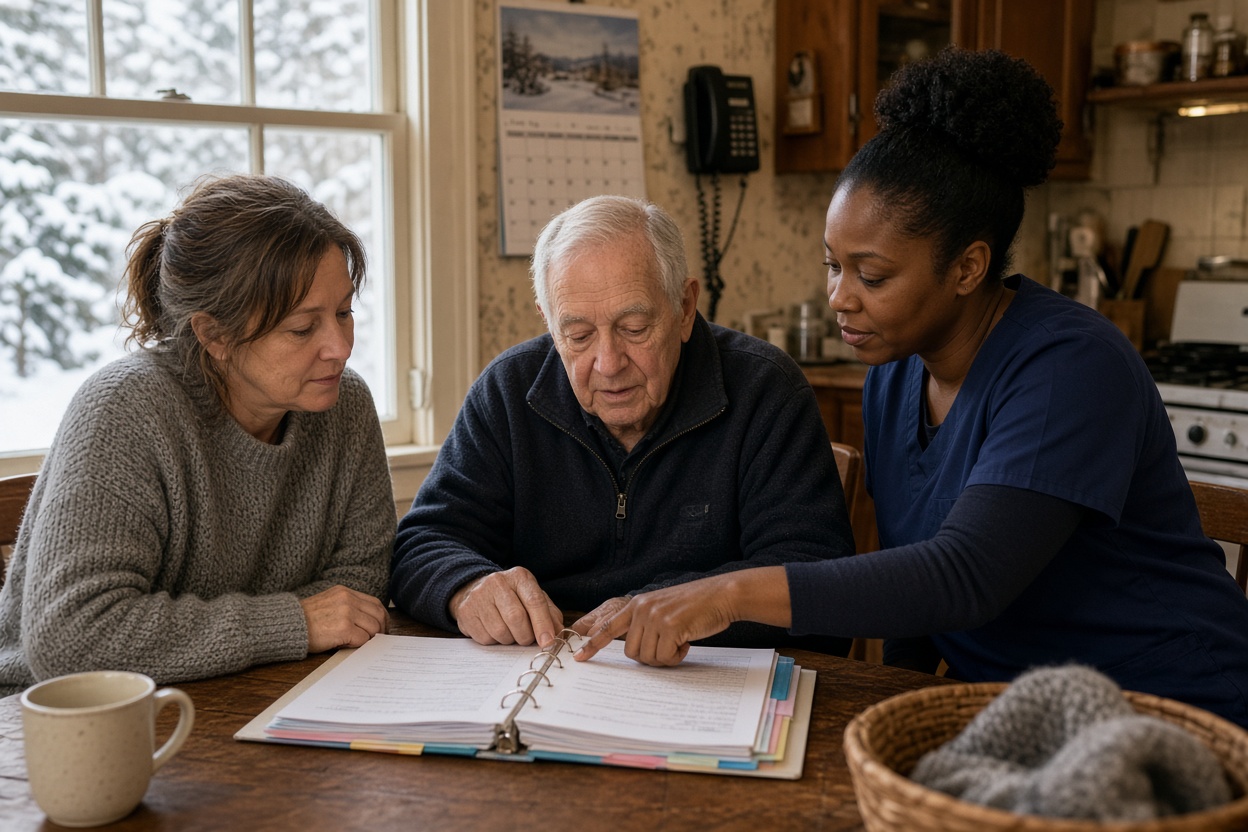
Nobody plans for the moment a parent stops breathing, a spouse falls in the bathroom, or a child with complex needs has a seizure that will not stop. When it happens, fear takes over and simple facts like the name of a medication or the address of a farmhouse down a long gravel road can slip away. If you care for someone at home in a rural part of Upstate New York, where an ambulance may take longer to arrive than you would like, a written emergency binder can be one of the most loving things you prepare. It puts the important information in one place so that you, a neighbor, a babysitter or a paramedic can act quickly and calmly.
This article walks through what belongs in that binder, how to organize it, and how to keep it current. It is written for family caregivers, neighbors who sometimes help out, and the professional aides who visit your loved one. Think of it as a practical starting point you can adapt to your family’s situation.
Why a Rural Emergency Binder Matters
Living outside a town center brings many gifts: quiet, open space, neighbors who wave from their tractors, and a sense of being known. It also means that the response time for emergency services can be longer than what city families experience. Weather, road conditions and the distance between houses all play a role. A binder does not replace calling for help, but it helps you use the minutes before help arrives well.
A binder also helps the people who arrive. Paramedics and emergency department staff ask many of the same questions every time: What medications are being taken? What are the allergies? Does the person have a directive about resuscitation? Who should be called? When those answers are on one page and easy to find, responders can focus on treatment rather than guesswork. Many families find that the act of building the binder reduces their own anxiety, too, because they know they have done what they can to prepare.
Finally, a binder makes care transitions smoother. If your loved one has to be taken to a hospital several hours away or moved to a rehabilitation facility, the same information travels with them. Staff at a new setting are grateful to receive an organized, accurate summary rather than a stack of loose papers.
Start With the Essential Medical Summary
The first section of your binder should be a one-page medical summary that can be pulled out and handed to anyone at a moment’s notice. Keep it current and keep it simple. Include the full legal name and date of birth, the primary diagnoses in plain language, known allergies including reactions, and the name and phone number of the primary care provider. If the person uses oxygen, a feeding tube, a catheter, a pacemaker or other devices, note that clearly with the make and any settings.
Next, list every current medication. Write the drug name, the strength, the dose, how often it is taken, the reason it is prescribed, and the prescriber’s name. Include over-the-counter products, vitamins, eye drops, inhalers, creams and supplements. A good habit is to photograph each medication bottle or blister pack and print the photos in the binder, along with a note of which pharmacy fills them. Medication lists change, so write a date at the top and update it whenever a prescription starts, stops or changes.
- Full name, date of birth and current address, including directions a stranger could follow
- Diagnoses and significant past medical events, such as surgeries, heart attacks or strokes
- Allergies and the specific reaction each one causes
- Current medications with dose, schedule and prescriber
- Primary care provider, specialists and pharmacy contact information
- Implanted devices, mobility aids and any equipment in the home
Document Wishes, Directives and Legal Papers
This section can feel heavy, but it is among the most important. Emergency responders are trained to start life-saving measures unless they have clear, valid documentation telling them otherwise. Talk with your loved one and their physician about their wishes regarding resuscitation, intubation, and hospitalization. Then ask the physician to complete the appropriate state medical orders form, and keep a copy in the binder in a clearly labeled, easy-to-reach spot, usually near the front, along with a copy on the refrigerator if that is your home’s standard practice.
Also keep copies of a health care proxy or power of attorney for health care, living will, advance directive, and any guardianship papers if they apply. Write down where the originals are kept. Responders generally cannot read a document they cannot find, so the location matters as much as the document itself. If your loved one’s wishes change, update the forms promptly and replace old copies so there is no confusion about which version is current.
Remember that these documents are legal instruments. The rules about which forms are accepted and how they must be signed can vary, so confirm the details with your loved one’s physician, an elder law attorney, or official state health department guidance rather than relying on a general article.
Contacts, Insurance and Who to Call
Create a contact page that lists everyone who might need to be reached in an emergency. Start with the family members and friends who should be notified first, including the best number for each person and whether they live nearby. Add the primary physician, the after-hours answering service for that practice, the pharmacy, the home care agency, and any therapists, dialysis centers or specialists involved in care. If your loved one has a designated health care agent, make that person’s details prominent.
Insurance information belongs here too. Photocopy both sides of each insurance card, including Medicare, Medicaid, supplemental plans and prescription coverage, and note the member ID numbers and customer service lines. Many hospitals ask for this information within minutes of admission, and having it ready reduces stress at the registration desk. Keep a copy of the most recent summary of benefits if you have one, since coverage questions often come up during a crisis.
Finally, think about neighbors. In rural communities, a neighbor is often the first person on scene. Write down the names and numbers of two or three nearby people who have agreed to help, and make sure they know where the binder is kept and how to open the front door if needed.
Map the Home and Plan the Route
Directions are a surprisingly common gap in rural emergency planning. A dispatcher may not know which driveway belongs to your house, or the GPS may send an ambulance to the wrong side of a county road. Write clear, step-by-step directions from the nearest well-known landmark, including mile markers, turns, mailbox colors and what the driveway looks like in winter. Add the house number as posted and any gate codes, lockbox locations or dog warnings. Consider drawing a simple hand-sketched map and including a photo of the house from the road.
Walk through the home from a responder’s point of view. Where is the bathroom in relation to the front door? Is there a step, a narrow hallway or a basement stairway that would affect moving a stretcher? Are oxygen tanks, medication storage and a wheelchair clearly accessible? Note these details in the binder, along with the location of the main water shutoff, the electrical panel and any propane tank, since responders may need to know about hazards.
Plan for the weather too. In winter months, a rural road can be impassable for hours. Discuss with your loved one and your household whether there is a backup plan for a power outage, how to keep a phone charged, and whether a generator or battery backup is practical for medical equipment that requires electricity. Your binder can include a short list of these steps so that anyone in the house can follow them.
Build a Daily Care Snapshot
Emergency responders and new caregivers both benefit from knowing what normal looks like. Create a one-page snapshot that describes your loved one’s baseline: how they usually speak, what they can and cannot do on their own, their typical blood pressure or blood sugar range if those are monitored, their usual appetite and sleep patterns, and what calms them when they are anxious. If they communicate in a non-verbal way or have a condition such as dementia or a developmental disability, describe the signals you watch for and what helps.
This snapshot is also where you can note what changed recently. A paramedic who knows the person has been more confused since a urinary tract infection started a week ago has a very different starting point than one who has no history. Encourage home health aides and visiting nurses to update this page as they notice patterns. Their observations are valuable, and a shared, written picture of baseline function helps everyone recognize a true emergency.
Add a short personal section as well. Include the person’s preferred name, important life history that might help staff connect with them, religious or cultural preferences, and what they would want to be told or not told. These details turn a stranger in a uniform into someone who sees the whole person.
Practice, Review and Keep It Current
A binder that sits on a shelf for years becomes less useful with each passing season. Set a recurring reminder, such as every three months or whenever the clocks change, to review every section. Check that medications match the current prescriptions, that phone numbers still work, that the insurance cards are not expired, and that the directions still lead to your door. Replace any photos or documents that have become unreadable.
Consider holding a short practice run. Ask a family member or your home care team to show, in a calm moment, where the binder lives and how to pull the medical summary. Make sure every regular helper knows that the binder exists and where to find it. Some families keep a second copy at a trusted neighbor’s home or with a relative in another town, so that a copy is available even if the house is inaccessible.
Finally, teach your loved one to participate as much as they are able. Many people feel calmer knowing they have a say in how emergencies are handled. Reviewing the binder together can open honest conversations about what matters most, and those conversations are a gift in themselves.
Frequently Asked Questions
Where should the emergency binder be kept?
Keep it in a single, consistent place that anyone in the household can find quickly, such as a labeled shelf near the phone or the kitchen counter. Avoid locked drawers or rooms that a visitor could not access. Some families also keep a copy in a bag by the front door or in the car, depending on how the household is arranged.
Do I need a binder if my loved one only has a mild condition?
Yes, a simple binder is useful for almost everyone who receives care at home, even if their condition seems stable. Emergencies do not check the severity of an ongoing diagnosis before they happen. A short, two-page version with medications, contacts and directions can be enough, and you can expand it over time as needs change.
How often should I update the medication list?
Update it every time a prescription starts, stops or changes dose, and review the entire list at least every three months and before any hospital visit. Ask the pharmacy for a printed medication profile if that is helpful. Writing the date of the last review at the top of the page makes it easy for others to see whether the list is current.
Should I include a photo of my loved one in the binder?
A recent photo can be very helpful, especially for a person who may be confused, unable to speak, or who has been missing. It can also help responders confirm identity and help family members at a hospital recognize them quickly. Update the photo periodically so it looks like the person does today.
Can a home care aide help me build the binder?
Often, yes. Aides and nurses see daily patterns and can help you document baseline function, typical routines and any changes they notice. Ask your agency about how their team can support you, and confirm what information the agency keeps in its own records so the two sets of documents remain consistent. Information in this article is general, so check details with your loved one’s care team and official sources for legal forms.
Bringing It Together With Confidence
Building an emergency binder takes a few hours, but the peace of mind it offers lasts much longer. You are giving the people who may one day walk through your door the information they need to help your loved one well, and you are giving yourself a clearer head in a frightening moment. If you are not sure where to begin, start with the one-page medical summary and the list of contacts, then add the rest over the coming weeks.
If you would like support building a plan for care at home, or you have questions about how aides, nurses and other caregivers can fit into your family’s routine, reach out to At Home Care Partners for a free consultation. Our team is glad to talk through your situation, answer your questions and help you find the right next step, whether that is a binder, a care plan or a conversation about what your family needs most.
This article is general information, not medical advice. Please consult your loved one’s physician and official government sources for guidance on medical orders, legal documents and program rules.
More from the At Home Care Partners blog
- Caring for a Parent Across Upstate Ridgelines: Dementia-Friendly Routines for Rural Homes
- Fall Garden Chores and Aging Parents: Safe Yard Work in Upstate NY
- Dairy Barn Chores vs. Mom's Mobility: Keeping Rural Ties Safe
- Dairy Farm Families: Caring for an Aging Parent Who Lives Alone